office@chpmining.com
Address:07-511#, Dongsan Street,Muping Dist, Yantai City, ShandongProvince, China

ACTIVATOR

GET IN TOUCH

Zunzo Fun Run 2023 - Run, Connect, Thrive!

  • Suitable for All Levels
    Zunzo is delighted to present our exciting running event - "Zunzo Fun Run 2023." Get ready to embark on a thrilling running adventure, where you can connect with a passionate running community and experience the full joy of this amazing sport.
  • A Unified Community
    Be part of the Zunzo Fun Run 2023. Connect with a vibrant running community, sharing passion and making memories.
  • Charitable Giving
    At the Zunzo Fun Run 2023, run with purpose. Your participation contributes to meaningful charitable causes.
pexels-thelazyartist-1117493
pexels-maksgelatin-4775192
img-form-start

JOIN OUR RUNNING CLUB NOW

PHONE:
+86 18653566689
EMAIL:
office@chpmining.com


    COURSE/TUTORIAL

    RUNNING COURSE ARTICLES & VIDEO TUTORIALS ABOUT RUNNING

    17 June blog
    Methods for copper smelting
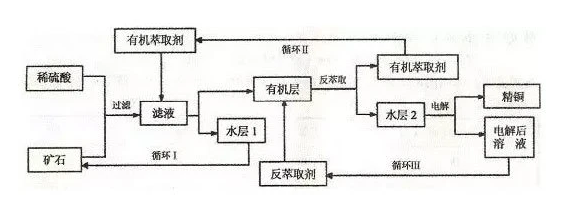
    Copper ore mined from copper mines is beneficiated into copper concentrate or copper sand with higher copper content. Copper concentrate needs to be smelted into refined copper and copper products. Copper ore mined from copper mines is beneficiated into copper concentrate or copper sand with higher copper content. Copper concentrate needs to be smelted into refined copper and copper products. Copper Smelting Process: The development of copper metallurgy technology has gone through a long process, but to this day, copper smelting is still dominated by pyrometallurgy, accounting for about 85% of the world’s copper output. Modern hydrometallurgy technology is gradually being promoted, and its introduction has greatly reduced the cost of copper smelting. Pyrometallurgical Copper Smelting Cathode copper, or electrolytic copper, is produced through smelting and electrolytic refining, generally suitable for high-grade copper sulfide ores. Pyrometallurgical smelting generally involves first beneficiating raw ore containing a few percent or permille of copper to 20-30% as copper concentrate, then conducting matte smelting in a closed blast furnace, reverberatory furnace, electric furnace, or flash furnace. The resulting molten matte (blister copper) is then sent to a converter for blowing into crude copper, and then undergoes oxidative refining and impurity removal in another reverberatory furnace, or cast into anode plates for electrolysis to obtain electrolytic copper with a grade as high as 99.9%. This process is short, highly adaptable, and can achieve a copper recovery rate of 95%. However, since sulfur in the ore is discharged as sulfur dioxide waste gas during the matte production and blowing stages, it is difficult to recover and can cause pollution. In recent years, methods such as the Baiyin process and Noranda process for bath smelting, and Japan’s Mitsubishi process have emerged, and pyrometallurgical smelting is gradually developing towards continuous and automated production. Besides copper concentrate, scrap copper is also a major raw material for refined copper, including old scrap copper and new scrap copper. Old scrap copper comes from old equipment and machinery, abandoned buildings, and underground pipelines; new scrap copper comes from copper scraps discarded by processing plants (the yield ratio of copper materials is approximately 50%). Generally, scrap copper supply is relatively stable. Scrap copper can be classified into: bare miscellaneous copper (grade above 90%); yellow miscellaneous copper (electrical wire); copper-containing materials (old motors, circuit boards); and copper produced from scrap copper and other similar materials, also known as recycled copper. Hydrometallurgical Copper Smelting Generally suitable for low-grade oxidized copper, the refined copper produced is electrowon copper. Modern hydrometallurgical methods include sulfating roasting-leaching-electrowinning, leaching-extraction-electrowinning, bacterial leaching, etc., suitable for heap leaching, vat leaching, or in-situ leaching of low-grade complex ores, oxidized copper ores, and copper-containing waste ores. Hydrometallurgical technology is gradually being promoted, and it is expected to reach 20% of total production by the end of this century. The introduction of hydrometallurgical smelting has greatly reduced the cost of copper smelting. The process flow diagram is as follows: Among them, copper extraction (the process of copper entering the organic phase from the aqueous phase) and stripping (the process of copper entering the aqueous phase from the organic phase) are important technological means in modern hydrometallurgical copper smelting.

    READ MORE
    17 June Comparison of the advantages and disadvantages of mainstream flotation reagents
    Comparison of the advantages and disadvantages of mainstream flotation reagents
    Flotation reagents are chemical substances used to improve the surface properties of minerals and the characteristics of flotation media. By adjusting the hydrophobicity of minerals and the stability of bubbles, minerals can easily adhere to bubbles and float, thereby achieving solid-liquid separation. Flotation reagents are chemical substances used to improve the surface properties of minerals and the characteristics of the flotation medium. By adjusting the hydrophobicity of the minerals and the stability of the bubbles, they allow minerals to easily adhere to the bubbles and float, thus achieving solid-liquid separation. The selection and use of these reagents directly affect the efficiency and effectiveness of the flotation process. Currently, mainstream flotation reagents mainly include collectors, frothers, and modifiers. Each reagent has different roles and advantages and disadvantages in the mineral flotation process. Collectors Types: Common collectors include xanthates (such as ethyl xanthate, amyl xanthate), thiosulfates, and amine collectors (such as dodecylamine). Advantages: They can significantly enhance the hydrophobicity of the mineral surface, improve the adhesion between the mineral and the bubbles, and thus improve the flotation efficiency. Disadvantages: Some collectors may be harmful to the environment, and excessive use may lead to decreased foam stability or reduced mineral recovery. Frothers Types: Frothers include pine oil, cresylic acid, fatty alcohols, and ethers. Advantages: They can quickly form a large number of stable bubbles, promoting mineral flotation and improving the selectivity and efficiency of flotation. Disadvantages: Some frothers may corrode equipment, and high concentrations may reduce foam stability. Modifiers Types: These include pH regulators (such as lime, sodium carbonate), activators (such as copper sulfate), and depressants (such as sodium thioglycolate). Advantages: By adjusting the pulp pH or suppressing the flotation characteristics of certain minerals, they optimize the flotation process and improve the grade and recovery of the concentrate. Disadvantages: Some modifiers may cause irreversible chemical adsorption on the mineral surface, affecting subsequent flotation results. New Low-Alkalinity Flotation Reagents Types: Such as modified starch, dextrin, chitosan, etc. Advantages: They exhibit good inhibitory effects under low-alkaline conditions, reducing the use of traditional reagents such as lime and reducing environmental pollution. Disadvantages: The research and development and application of new reagents still need further optimization, the cost is higher, and the effects of some reagents are not yet fully clear. Depressants Types: Including organic depressants (such as polyglutamic acid PGA) and inorganic depressants (such as lime-γ-PGA composite system). Advantages: They can effectively suppress the flotation of specific minerals, improve separation efficiency, and are especially suitable for complex mineral systems. Disadvantages: Some depressants may have a negative impact on the environment and should be used cautiously. The selection of flotation reagents should consider the mineral properties, flotation conditions, and environmental requirements comprehensively. Reasonable design of reagent ratios and usage methods is the key to improving flotation efficiency and environmental protection.
    READ MORE
    Products
    Contacts
    WhatsApp
    Email